Moore Brothers Blog

Moore Brothers Blog: Wine News

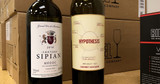
One Of These Is Wine. The Other Is Not.

One Of These Is Wine. The Other Is Not.

history David Moore

Sounds rather pedantic, no? But imagine this: Say one of the bottles is “Ragú® Tomato Sauce,” and the other is a jar of fresh marinara from a little old lady in Italy, made from her own tomatoes. Same difference. The bottle on the left was produced by a person farming his own fruit. And over the growing season he was constantly in the vineyard thinning leaves and making sure each grape met optimal ripeness. The fruit was harvested by hand, and taken to the winery with great care, where it was hand-sorted to make sure only the ripest fruit went to the crusher. This bottle of wine also states who grew, produced, and bottled the wine, as well as where this all took place. The bottle on the right tells us nothing about where the fruit was grown (other than a vague “Napa Valley” AVA). The technical details are spelled out on the bottle. “Optimum Brix” (a measure of sugar in the grapes) is listed (proudly) at 25 degrees. More on this in a momen

Oak In Industrial Wine

Oak In Industrial Wine

history David Moore

So here's the deal. It is accepted wisdom that storing wine in oak barrels may in many cases be beneficial. Storing wine in barrels may add flavors and/or textures that add desirable complexity to wine. Myriad decisions regarding the quality (and/or “qualities") of the various types of barrels (French vs. American, vs. Slovenian oak etc., new barrels vs. used, or “neutral,” etc.) have to be made by any winery regardless of scale. Over 20 years ago, as “oaky” became a synonym for “high quality” (I'll reserve discussion about aesthetics for another time), large-scale producers were faced with a big challenge; how do you get “oaky” when you need to sell wine at supermarket prices? You see, barrels are expensive. The typical barrel holds 300 bottles. A new barrel that will impart that “oaky” flavor (a barrel used once, is considered neutral–incapable of imparting oak flavors), will cost anywhere from $250 to $1500 per

Working the Soils in Organic Winegrowing

Working the Soils in Organic Winegrowing

Meet the Winegrowers David Moore

Treating esca, organically, Here's Greg Moore and Peter Fischer of Château Revelette discussing the importance of organic farming in winegrowing. It's a good thing to let some weeds and wildflowers to grow among your vines - this attracts other life to the vineyards, helping to maintain balance. It's also a good idea to cut these weeds and flowers so that they can return natural nutrients to the soil.

With Climate Change, In Some Vineyards, Only A Tractor Will Do.

With Climate Change, In Some Vineyards, Only A Tractor Will Do.

greg Greg Moore

When climate change effects the replanting of vineyards Climate change plays a part in Germany. It used to be that the Ratzenbergers could count on frosts in winter, which help break up soils in the spring. It hasn't happened in a number of years now, so out comes the tractor. Jochen Sr. and Jochen Jr. explain to Greg what's happening.

Why Riesling became so important.

Why Riesling became so important.

greg Greg Moore

Greg at the tasting table If you’ve ever wondered why so many wine “experts” consider Reisling the greatest wine grape, take a few minutes to watch Greg at a recent tasting with visiting winegrower, Jochen Ratzenberger. Here, Greg tells the story of how Riesling became so important, and proved its reputation.

Training Vines In The Halenberg

Training Vines In The Halenberg

greg Greg Moore

The work looks easy–until you realize you’ll be walking up and down a 50 degree (or better) slope repeating the movements thousands of times. Here’s a taste of the hard work that goes into fine wine. Also Greg gets a quick tutorial from someone who has done this for a number of years on the Halenberg one of Germany's most important vineyards.

The "Champagne Method"

The "Champagne Method"

greg Greg Moore

Jochen Ratzenberger riddling his single-vineyard sparkling wine - Bacharacher Sekt This is about eight minutes long, and worth the watch. Here’s Greg explaining how hand-made Champagne Method sparkling wine is produced, whether in Champagne itself or in all the various areas that produce sparkling wine using this traditional technique.

Tannins In Wine

Tannins In Wine

greg Greg Moore

What are “tannins?” In this video from an in-store tasting at Moore Brothers Wine Company, Greg Moore explains tannins in wine; what they are, why they are, and how tannins shape our perception of wine.

You are currently shopping in the store!

If you want to shop from one of our other locations shown below, your current shopping cart will be cleared - you may only shop and checkout from a single location at a time.

Don't Change Store

Select Your Location

Please choose the store below which best suits your interests. Thank you for visiting!

New Jersey Pickup & Shipping to NJ

For in-store pickup from our Pennsauken, NJ shop (10 minutes from Center City Philadelphia), or delivery to New Jersey addresses.

Delaware In-Store Pickup

For in-store pickup from our Wilmington, DE shop.

NEW YORK/DIRECT SHIPPING Pickup & Shipping to 36 states

For delivery to your door in NY, PA, DC, CT and 32 additional states, or in-store pickup from our Industry City Brooklyn shop.