I’m often asked, “would you ever want to take us with you on one of your wine trips?”
The answer is a polite “no,” but not because I wouldn’t enjoy the company.
Sure, the idea of traipsing around from vineyard to vineyard in this or that country sounds pleasant, but I promise that nobody wants to travel the way that Greg and I do (cramming as many appointments into the shortest amount of time as physically possible—sleep/hunger be damned—is no one’s idea of leisure time.
This is work, after all.
But my recent trip: a three-day, 1600 kilometer sprint (marathon?) visiting our five suppliers in Spain and Portugal, is the most grueling itinerary I’ve put together. Just a bit more grueling than the effort it will take you to finish this trip recap (don’t worry, you only have around 2000 more words to go…)
¡Vale, vamos!
Day 1: Bodegas Arrocal and Luna Beberide
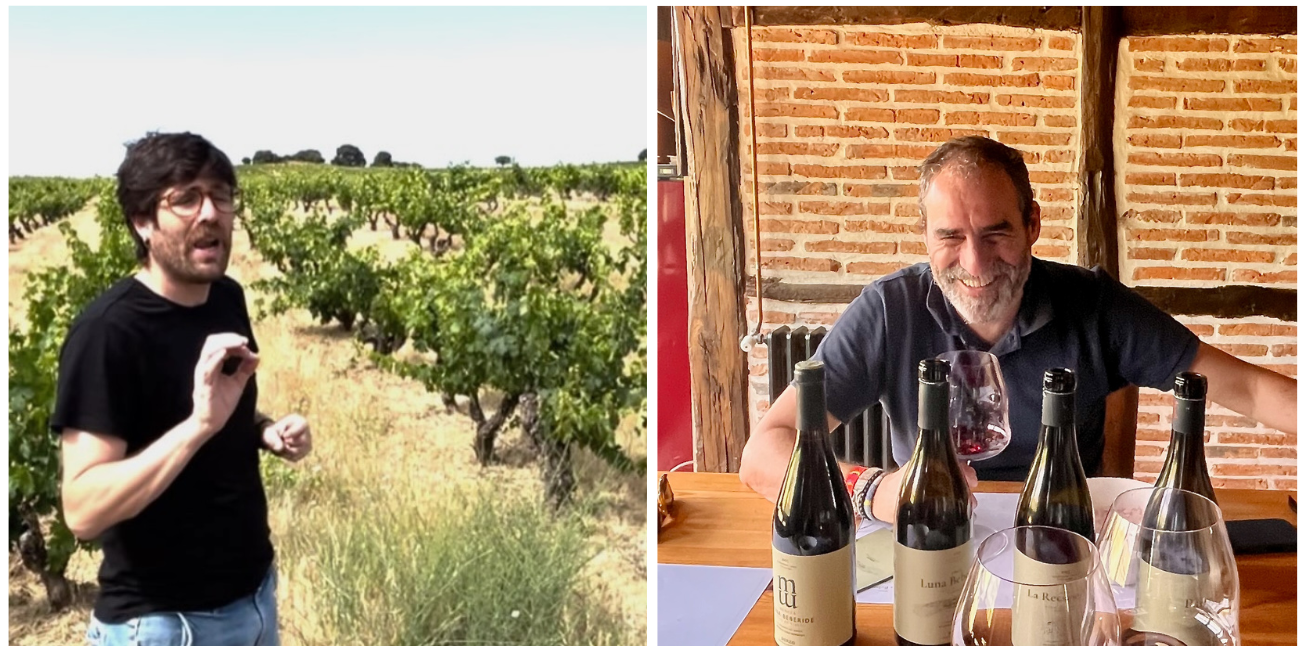
My red-eye from JFK landed on time (phew!) in Madrid at 6am, and after securing some much-needed caffeine (thank you, Duolingo, for teaching me “quiero un cafe por favor” in my very first Spanish lesson a few weeks prior), I was piloting my comfortable and stylish compact SUV (yes, I’ll admit, with an automatic transmission) north for my 10am appointment with Rodrigo Calvo of Bodegas Arrocal in Ribera del Duero.
I had first tasted Rodrigo’s wines in March (a connection made via Nuno Morais Vaz of Geographic Wines, our new supplier in Portugal’s Douro Valley…more on him later), and was taken with the purity, freshness, and charming character of the wines he and his brother, Asier, grow at their family’s farm in Gumiel de Mercado. Rodrigo and Asier represent the ninth generation to cultivate vines in this historic village, and yet, just three years ago, the two brothers completely transformed the approach at Bodegas Arrocal, eschewing the traditional classification of Ribera del Duero wines based upon aging before release, and instead, letting the wines be defined by their unique vineyard origins.
Rodrigo and Asier are obsessed with the viticultural history of their hometown, and have spent the past decade-plus recovering the most historically significant vineyards in Gumiel de Mercado—many of which had been entirely abandoned and untouched for decades. The 2023 vintage represented an inflection point for the estate, as it was the first year where they produced their “Village,” “Los Colmenares,” and “Casablanca” cuvées (all dedicated to specific parts of their estate), and I am very excited to introduce these three wines from 2024 to you.
I would’ve loved to spend more time in the vines with Rodrigo, but I still had a 340 kilometer drive ahead of me and a 4pm appointment to make with Alejandro Luna of Luna Beberide in Bierzo. So after a brief tasting with Rodrigo (which confirmed my first impressions from March—as if the previous two hours spent in the vineyards weren’t enough to convince me that this is a very special estate), I was on my way. No time for lunch; granola bars in transit would have to suffice for now.
A thrilling three and a half hours later (culminating with an unnerving and totally unnecessary final kilometer on a rocky and potholed tractor path through Alejandro Luna’s vines—thanks a lot, Google Maps, for saving me all of twelve seconds, when I probably could’ve taken a much more well-manicured dirt road to Alejandro’s winery instead), I arrived at Luna Beberide in Bierzo…exactly twenty-four hours after I left my home in South Philadelphia.
Bierzo is a tiny, mostly unknown region in the northwest corner of Castille y Léon, with very little historical prestige for its wine. But, two thousand years ago, the largest gold mine in the Roman empire was close by, and if the Romans were there, they were making wine. In the Middle Ages, Cistercian monks tended the Mencia vines of Bierzo, but by the second half of the 20th century, the region had been in a steady decline, reaching its nadir in the 1980s and 1990s with the import of international varieties (Cabernet Sauvignon, Chardonnay, etc.).
Enter Alejandro Luna: a fourth generation grower in Bierzo, but the first in his family with the ambition to focus on high-quality, estate bottled wine. He took over his family’s vineyards in Villafranca del Bierzo in 2000, just around the same time that his like-minded colleagues nearby (including Raul Perez, Alvaro Palacios and Ricardo Perez) were coming to a similar realization: the future of Bierzo depended on growers who would champion its two traditional varieties, Mencia and Godello.
In the quarter-century since, Alejandro has quietly been producing some of the most exciting wines in this otherwise overlooked corner of northwest Spain from the ancient Mencia vines of his maternal grandfather (the average age of the vines at Luna Beberide is over sixty years old), as well as the newer, high-elevation (900 meters above sea level) plantings of Godello.
Alejandro speaks fantastically charming, yet thoroughly choppy English, but throughout our extensive tour of the vines, from the terrifyingly steep slate hillsides of “A Serra” and “Vaca” to the rolling hills of the Valdetruchas (“Valley of Trouts”), it was easy to understand the raison d’être of Luna Beberide.
I’d also tasted Aljeandro’s wines in March, yet another connection via Nuno of Geographic Wines (don’t worry, we’ll get to him eventually). These are fresh, open-knit, and beautifully defined—not to mention wonderfully affordable—white and red wines for just about everything (“happy wines!” are how Alejandro likes to describe them).
Despite my utter exhaustion at this point, I was still a bit disappointed to turn down Alejandro’s invitation to watch the Spain v. Cape Verde match at a nearby bar. Instead, I made my way to my hotel in Cacabelos, where I learned that, because it was Monday, not only was the hotel restaurant, but nearly every other restaurant in the town was closed. Not “Turco Kebab Pizza” though! Best falafel platter of my life.
Day 2: Quinta Couselo
After a very, very heavy night of sleep, I was up early to begin a 260 kilometer trek over the Gallician Massif all the way to the western Atlantic coast of Spain, where the Miño River meets the ocean. Unfortunately, the hotel’s breakfast had not yet been served by the time I needed to depart, so another round of road granola bars it was!
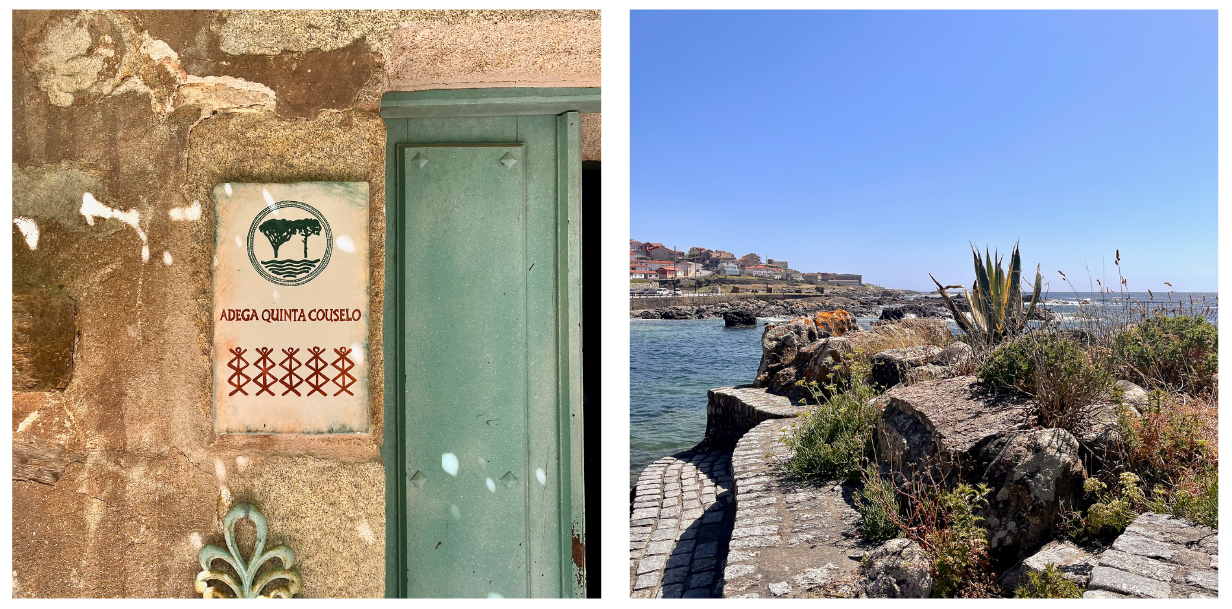
Tucked away in the venerable southwestern-most corner of Rías Baixas’ O Rosal valley, Quinta Couselo boasts more than 900 years of viticultural history. But in its more recent history, our friends at Couselo have supplied us with the terrific Rías Baixas Albariño and spectacular O Rosal traditional blend of Albariño, Loureiro, and Caiño Blanco that have been nearly impossible to keep stocked on our shelves over the course of the near-decade that we’ve worked together.
After a tour of the vines and lengthy tasting, Couselo’s Roger Matthews and Yves Constantanides were kind enough to treat me to a leisurely lunch (real food!) at the oceanfront Restaurant Area Grande, where we shared a whole pan-fried Lenguado (a local Godzilla-sized species of sole), caught that morning less than a kilometer from where we were sitting.
From there, it was a short drive across the Miño River into Portugal before continuing 200 kilometers southeast into the Douro Valley, where I’d start my third, and final day of this crazy trip.
Day 3: Geographic Wines and Freire Lobo
“I love two things: driving and geography. This lets me do both.”
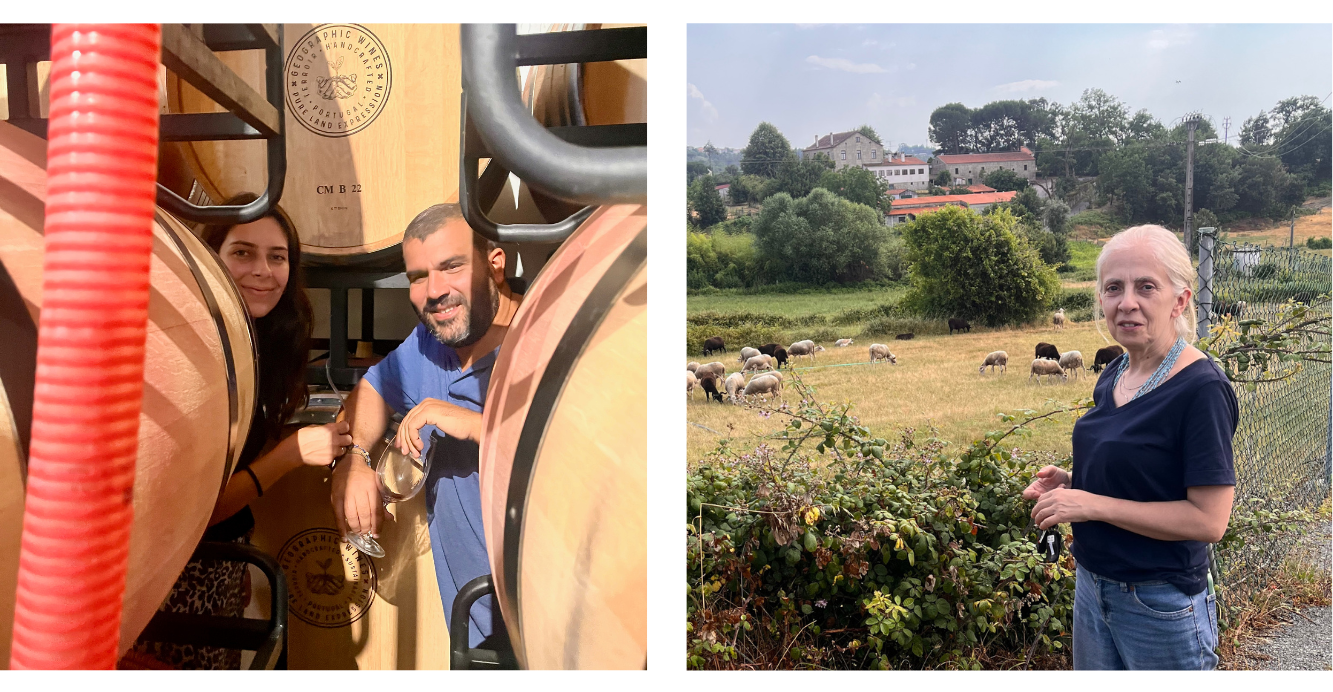
That was Nuno Morais Vaz of Geographic Wines (I told you we’d get to him!), whose family traces their roots back seven generations in Portugal’s Douro Valley. Along with his partner, Daniela Fernandes Matias, Nuno is always on the move: from one tip of the the westernmost edges of the Douro in Baixo Corgo to the Spanish border in Almendra (where the vines were planted in 1850), as well as to vineyards in Vinho Verde and Barraida, to oversee the farming of 35 different vineyards, all owned by small family growers. More than 80% of the vineyards that Nuno and Daniela work with are over 100 years old.
But the story of Geographic Wines is not so much one of preserving the traditions of the past, as much as it is one of adding a new chapter to Portugal’s most historic wine producing region.
Many years ago, Nuno’s great-great-great-grandfather Camilo Vaz was the second largest vineyard owner in the Douro. But fragmented inheritances or a lack of interest meant that by the time Nuno was getting interested in wine, there weren’t many vines left. Even if the interest in viticulture skipped a generation here and there in the family, it didn’t miss Nuno. He first worked in New Zealand before returning to Portugal, where he spent seven years as the assistant to Anselmo Mendes (one of Portugal's most renowned winemakers in Vinho Verde).
In late 2020, he met Daniela Matias, who was completing her master’s degree in viticulture and enology at the University of Lisbon (with honors for merit and excellence). And less than a year later, Geographic Wines was born, with 2021 being their first vintage. From their clean and elegant Vinho Verde Alvarinho to their stunning, multi-layered white and red Douro blends, these are very special and very unique expressions of these two storied Portuguese winegrowing regions, and I look forward to sharing them with you very soon.
After a winding tour of half a dozen steep, terraced, century-old vineyards that overlook the Douro from every possible angle, we stopped for a brief “lunch” in Pinhão—the butcher shop Quinta das Barrocas, run by Nuno’s friend Fernando, which is frequented by Michelin-starred chefs from all over Portugal. And by “lunch,” I mean whatever charcuterie Fernando felt like slicing and plopping on the counter, while we ate with our hands. But hey, it beat granola bars!
From there, I was on my way to Oliveira do Hospital, 170 kilometers south in Portugal’s Dão, where our good friend Elisa Freire Lobo works her magic.
Unlike the Douro Valley, the Dão is not nearly as well-known. But this landlocked, overlooked area is a Goldilocks region for elegant, balanced wines, with the Serra de Estrella (Portugal’s highest mountain) to the east, which protects it from the heat of central Spain; the Caramulo to the west, which protects it from the wet Atlantic air; and a constant cool and dry breeze from the southwest, which keeps temperatures nice and moderate.
But nobody in the Dão has better land than Elisa Freire Lobo. Her vineyards are the highest, her soils are the poorest, and we all know what that means: lots of hard work, but with the potential for the most elegant and refined wines of the region.
Elisa is no stranger to hard work (nearly half of her vineyards burned in a 2017 wildfire; and aside from the vines, she also tends 300 Bordeleira sheep, which produce milk for her dairy, where she is one of five producers who make DOP Serra de Estrella cheese). It’s hard to believe that 2014 was her first vintage of estate bottling (all of 600 bottles of red and 120 bottles of white!), because her wines have the timeless, unforced elegance of a much more seasoned winegrower.
She’s too modest to admit it though, and will point instead to the priceless parcels of vineyard land that have been in her family since the 18th century. But the reality is Elisa is yet one more example of an extremely talented winegrower working in an otherwise underappreciated region, producing wines that punch far, far over their weight. We tasted through her entire range: from the delicious Sardanita Pet-Nat, Vinho Branco, and Vinho Tinto that you might already know (as well as her first bottling of rosé—please stay tuned next year!), to positively stellar single-vineyard and single-variety bottlings, including her unforgettable Encruzado. Keep an eye out for these—you never know when something special might pop up.
And yes, the cheese at Freire Lobo is spectacular too! So much better than granola bars.
Thank you for reading this far, and for your interest in these beautiful wines. I hope you enjoy them as much as I do, and if you catch me in the store, please don’t hesitate to ask me more about Rodrigo, Alejandro, Roger, Yves, Nuno, Daniela, and Elisa. I have many more stories to tell.