Moore Brothers Blog

Moore Brothers Blog: Wine News

A Note on Barolo

A Note on Barolo

wine David Moore

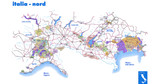
A Salumeria's sign in Monforte It’s always an interesting question; “What’s the difference between this Barolo and THAT Barolo?” When talking about how “place” determines what the wine will be, the “geeks” among us like to talk about soils, altitude, and exposure - each giving something to the wine that can’t be reproduced in the next town over. But the one other aspect of “terroir” that’s often missed is “culture.” And differences in culture shape the viticolotore’s aesthetic just as much as soils. You can see this in looking at the two Barolo villages represented at Moore Brothers; Monforte and Serralunga. Monforte is a much larger town than Serralunga. It was one of the important centers of commerce in the area which became known as the “Barolo” zone. Quite broadly speaking, the inhabitants of this town were much “better off” than their counterparts in Serralunga. In Serralunga, the market for grapes was dominated by the large Fontanafredda winery, and most of the farmers s

Paolo’s Pentagon

Paolo’s Pentagon

wine David Moore

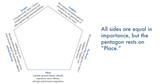
Paolo DeMarchi is one of the most important wine producers in Italy. He is one of a handful of thoughtful growers who were key "inventors" of modern Chianti. Imagine the challenge of redefining a very old (and at the time, sleepy) wine region. Most wine sold here had to be sold in wicker-basket-bottles because novelty trumped quality. To this day, there are those who think of Chianti as thin, skeletal wine, with a handy empty bottle, useful for holding a candle. But in the seventies, when Paolo came of age, he and a few others recognized that the entire area had to be reorganized with a view towards quality over quantity. Just as important, there had to be a respect for tradition, or else the raison d'être would disappear–there would be nothing distinctive about the wines, and the wine-producing economy risked collapse. We often speak about “Old World” wines as being an encapsulation, if you will, of a small region's cultural, and agricultural evolution; less “product”

Kathryn's Rack of Lamb

Kathryn's Rack of Lamb

favorites Kathryn Schockor

Kathryn’s Rack of Lamb 2) 2-pound racks of lamb, trimmed 6) cloves of garlic, finely minced 2) tablespoons fresh rosemary leaves, finely minced 4) tablespoons extra virgin olive oil     Sea salt     Freshly ground black pepper Place the lamb racks fat side up on a large rimmed baking sheet. Combine the minced garlic and rosemary with the olive oil. Rub the garlic-rosemary mixture all over the lamb. Season with salt (to taste) and let stand at room temperature for 1 hour. Preheat the oven to 450°. Roast the lamb in the upper third of the oven for 25 minutes for medium-rare meat; 30 minutes for more well done meat. Transfer the lamb to a cutting board, tent loosely with foil, and let rest for 10 minutes. Carve the racks between the rib bones and transfer to plates. Season with black pepper, if desired, and serve immediately.

Biodynamics and Sparkling Wine:

Biodynamics and Sparkling Wine:

learn Greg Moore

Sophie, Maxime, and Geneviève Barmès in the Clos Sand (photo: Greg Moore) The late François Barmès wholeheartedly embraced the Austrian philosopher Rudolph Steiner’s belief in the interdependence of the forces of life, earth, and the cosmos. So in 1995, in order to undo the damage caused by decades of chemically dependent viticulture, he began the transformation of his vineyards to biodynamics. One of the first principles of biodynamics is the belief that the farm is a self-contained living entity, which gives rise to the rule that a biodynamic farmer may add no organic substance to a product of his farm; if that organic substance did not itself grow within the boundaries of the same biodynamic farm. Which means that the “Champagne Method” isn’t an option in producing biodynamic sparkling wine, because it requires the addition of sugar to a tank of dry wine just before bottling (needless to say, beets and sugar cane don’t grow on the chalk soils of Champagne, or pink sandstone

Miss Nancy's Shrimp & Grits

Miss Nancy's Shrimp & Grits

favorites Terry Moore

Miss Nancy’s Shrimp ‘n Grits I’m the luckiest guy in the world. Every husband says that, but I’m empirically correct—no one makes shrimp and grits like Bridget (except for her mother, Nancy, who wrote this recipe): Grits: 1 14-ounce can of chicken broth (or 1 and 3/4 cups homemade) 1 cup milk 1/2 tsp. salt 1 cup grits 3 ounces shredded cheddar cheese 1/4 cup grated Parmesan cheese 1/2 tsp. Louisiana hot sauce 1/4 tsp. ground black pepper Preparation: 1. Bring chicken broth, salt, milk and 1 1/3 cups of water to a boil. Stir in grits and reduce heat to low, cooking the grits until thick, approximately 10 minutes. 2. Stir in cheese, hot sauce and pepper until melted and incorporated. Remove from heat and plate, topped with shrimp mixture (below). Shrimp Mixture: 2 slices of bacon 2 tsp. vegetable oil 1-2 lbs. peeled and cleaned uncooked shrimp 1/2 cup chopped green onions 1/8 tsp. salt 2 gar

Industrial Wine - Allowable Chemicals

Industrial Wine - Allowable Chemicals

wine David Moore

polyoxyethylene 40 monostearate…looks appetizing… The following is offered without a whole lot of comment–well, here and there I may have added a comment. This is a by no means comprehensive list of ATF approved chemicals and processes allowed in U.S. "industrial" wine production: polyoxyethylene 40 monostearate (I think that's what the formula above is about. I'll have to ask Greg's daughter. She knows these things) dimethyldicarbonate diacetyl (gives your cheap Chardonnay its "buttery" flavor - and Orville Redenbacher popcorn its flavor) silicon dioxide dimethylpoly-siloxane sorbitan  monostearategyceryl mono-oleategyceral dioleate (nothin' says "love" like an oleate, and a DI-OLEATE is even more special) copper sulfate calcium carbonate ascorbic acid  erythorbic acid ammonium phosphate [mono- and dibasic] (I prefer the mono, but, you know, thats just "how I roll") gum arabic dimethyl dicarbonate catalase ce

Say It With Me Now...

Say It With Me Now...

wine David Moore

Pacherenc du Vic-Bihl Sec from Château Viella – and a perfect pairing It had been been a long time since we’d been able to bring in one of the great white wines of the Southwest of France. We missed them, but Alain Bortolussi at Château Viella finally had enough for us to bring in a small amount of his dry, (say it with me now), Pacherenc du Vic-Bihl. If you’ve never experienced wine like this, it’s a revelation. The most important indigenous white grapes of the Southwest in appellations such as Pacherenc, Irouleguy, and Jurançon include Gros Manseng, Arrufiat, and Petit Manseng, all grown to varying degrees depending on local preferences. They are a “Basque” tradition.

Sweet 'n Dry, explained by a winemaker

Sweet 'n Dry, explained by a winemaker

favorites Wil Franklin

Wil Franklin is a Moore Brothers alum, with the reputation as the finest producer in Humboldt County, California. He has given us permission to republish his pieces from The Courtier. One of the most perplexing characteristics of wine is “sweet vs. dry”. I have often heard friends say they don’t drink white wine because it’s too sweet, yet they like late harvest red Zinfandel that is sweet. Others tell me they don’t like red wine because it’s too dry, but then turn around and drink an even drier white wine. What’s at the root of these perplexing contradictions that keep some people from even considering half of all wines? Clearly the words dry and sweet mean different things to different people. To make all this more understandable, I’ll put on my winemaker’s hat and explain the actual, technical meanings behind the terms. First, dry does not mean the puckering sensation felt in the mouth when quaffing a high acid white wine – that’s tartness. Second, dry is not the tactile, chalk

Visiting Corzano e Paterno

Visiting Corzano e Paterno

wine David Moore

The sun had just set. Fireflies coming out. The nightime shadows not quite overtaking the view. Evening in San Pancrazio, staying at the Corzano e Paterno agriturismo.The sheep are still speaking to one another in the fields. My wife's arms around me. Life is good. If you’re heading to Tuscany, stay here. Fall in love again. - DM

Free Wine Preservation Kit!

Free Wine Preservation Kit!

wine David Moore

The free wine preservation kit Yessiree bob! Your own FREE WINE PRESERVATION KIT right here! No kidding. After all these years, these empty (and resealable) glass bottles are the best way I've found to preserve wine. Ideally, you want to fill them to the brim before sealing, and I recommend you slap a quick label on, so you know what you've got in the fridge. The glass, resealable 10oz. club soda bottles are particularly helpful (we'll probably see a spike in sales at Wegman’s:), but I've used all manner, including empty Orangina bottles. I also get the empty green bottles with corks at places like Sur la Table, but I'd bet they're somewhere on amazon (what isn’t available there). These will keep your wine fresh (in the fridge – for a week or so), and beat anything else, including expensive “inert gas” kits and Vacu-Vins (which pull out more than just oxygen). Just fill 'em to the brim and seal them up. Best of all, they're free to use over and over. -DM

You are currently shopping in the store!

If you want to shop from one of our other locations shown below, your current shopping cart will be cleared - you may only shop and checkout from a single location at a time.

Don't Change Store

Select Your Location

Please choose the store below which best suits your interests. Thank you for visiting!

New Jersey Pickup & Shipping to NJ

For in-store pickup from our Pennsauken, NJ shop (10 minutes from Center City Philadelphia), or delivery to New Jersey addresses.

Delaware In-Store Pickup

For in-store pickup from our Wilmington, DE shop.

NEW YORK/DIRECT SHIPPING Pickup & Shipping to 36 states

For delivery to your door in NY, PA, DC, CT and 32 additional states, or in-store pickup from our Industry City Brooklyn shop.